
Perimenopause symptoms nobody warns you about: 4 root causes and functional approaches that actually help
By Becca Chilczenkowski, FDN-P, AADP Board Certified | Female Hormone Specialist, Founder of FitMom
In this article you will learn:
Why perimenopause symptoms are so strange, unpredictable, and often dismissed by conventional medicine
The four root-cause problems driving the most confusing symptoms: nervous system dysregulation, histamine overload, the androgen shift, and gut disruption
Why hormones are often not the main problem, even when symptoms feel hormonal
Functional approaches and targeted support for each category
Which lab tests give you the most useful picture of what is actually happening
Somewhere in your late 30s or 40s, your body starts speaking a language nobody taught you how to read. An itch deep inside your ear that makes no sense. A crawling sensation on your skin that has you checking your arms for bugs that are not there. A stress response that used to handle deadlines, toddlers, and difficult in-laws just fine, and now cannot handle any of it. Heart palpitations that send you to urgent care for a completely normal EKG. Hives out of nowhere. A chin hair that shows up the same month your ponytail starts feeling noticeably thinner.
If your doctor mentioned hot flashes and irregular periods when you asked about perimenopause and nothing else, the full symptom list is longer, weirder, and far more explainable than most women are ever told. Here is what is actually happening beneath the surface, symptom by symptom, and where to start if you want to feel like yourself again.
Why perimenopause symptoms feel so unpredictable
Perimenopause is not a smooth, gradual decline. It is hormonal chaos. Estrogen does not just drop; it surges and crashes unpredictably, sometimes swinging higher than it ever did in your 20s before crashing back down days later. Progesterone, meanwhile, often starts declining years earlier, sometimes as early as your mid to late 30s, long before anyone would call you perimenopausal.
Perimenopause rarely creates a new problem out of nowhere. It reveals dysfunction that was already quietly present: gut issues you shrugged off, a nervous system running on fumes, nutrient gaps from years of stress and dieting, a mast cell system that has been a little too reactive for a little too long. While your hormone levels were higher and more consistent, your body had more buffer to compensate. As that buffer becomes erratic, the compensation starts to break down, and symptoms that were simmering below the surface finally show up with a roar.
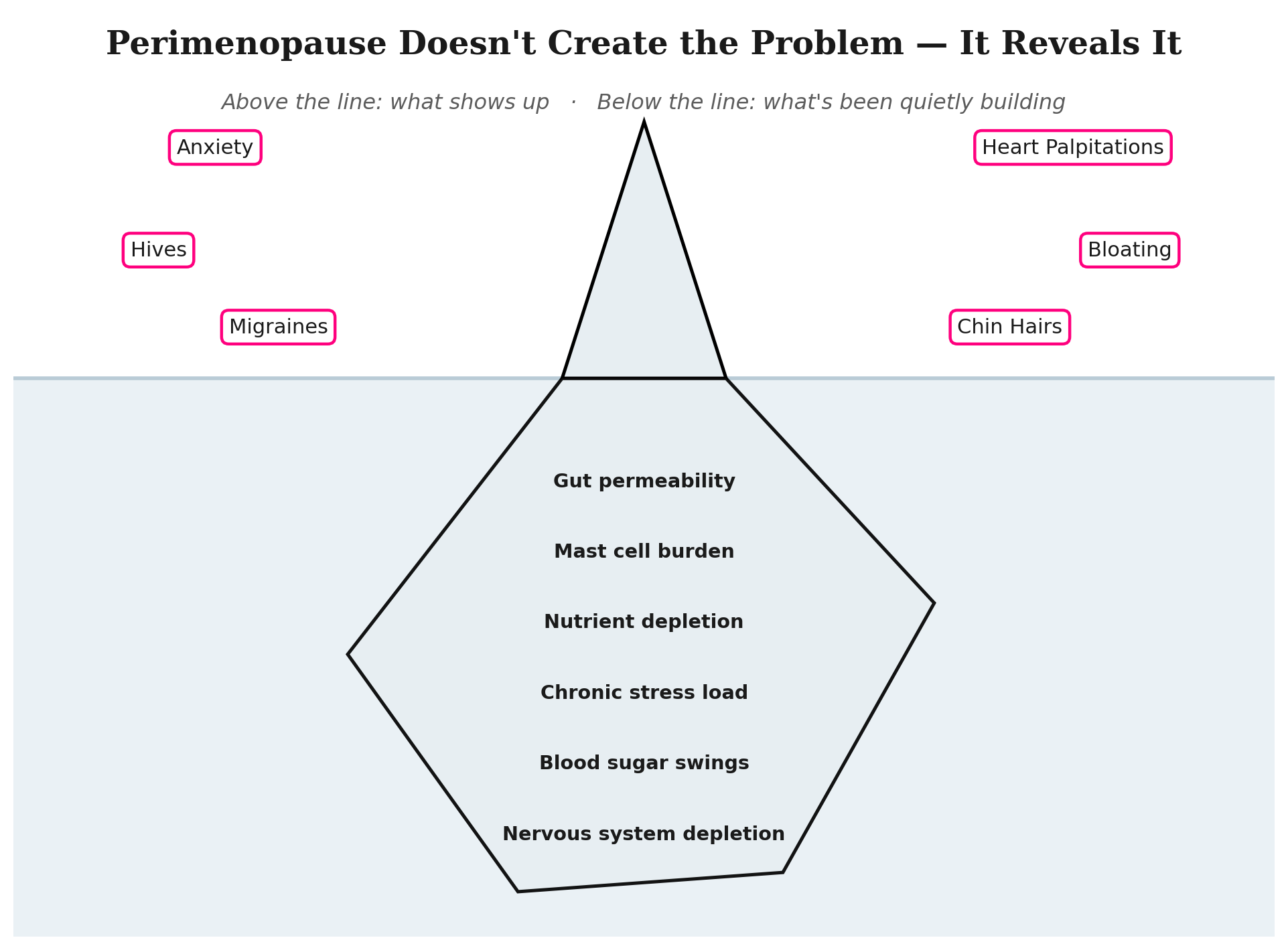
That is genuinely good news, even though it does not feel like it right now. It means these symptoms are addressable. And in many cases, hormones are not even really the main problem.
Root cause 1: your nervous system's new sensitivity
One of the very first signs of perimenopause is that you can no longer handle what you used to handle. A chaotic morning, a work deadline, a fight with your partner: these now completely derail you. You are more anxious, constantly on edge, exhausted at night but unable to sleep.
The GABA and glutamate connection
GABA and glutamate are your brain's two main volume controls. GABA is your calming, inhibitory neurotransmitter, the brake pedal. Glutamate is excitatory, the gas pedal. You need both, in balance.
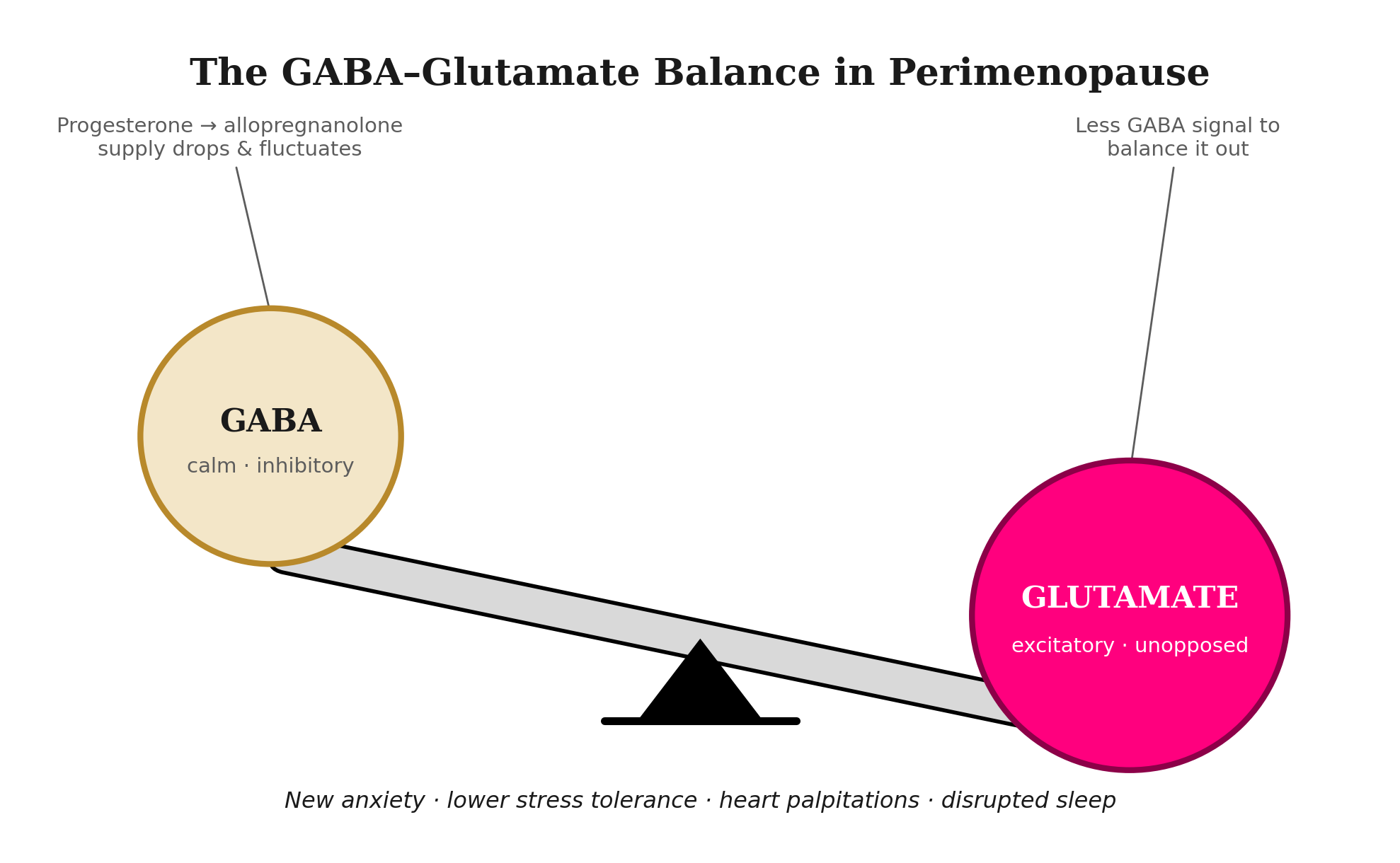
Progesterone metabolizes into a compound called allopregnanolone, which acts directly on GABA receptors in your brain, the same receptors targeted by anti-anxiety medications. It is one of your body's built-in calming mechanisms. In perimenopause, progesterone production becomes erratic before it declines, and allopregnanolone drops and fluctuates right along with it. With less of that calming signal available, glutamate's excitatory push becomes relatively unopposed. That is a big piece of why anxiety can appear for the first time in your life, why your stress tolerance seems to have vanished overnight, and why your heart can feel like it is racing over nothing.
Research suggests it is not just the low level of progesterone that matters. It is the speed of the drop. A rapid decline appears to provoke far more anxiety than a slow, gradual one, which may explain why the chaotic swings of perimenopause hit so much harder than the steadier, lower hormone levels of full menopause.
Nervous system symptoms to watch for
Anxiety that appears for the first time or worsens significantly
Drastically lowered stress tolerance
Heart palpitations with a normal EKG
Exhaustion at night paired with inability to sleep
Feeling wired and depleted at the same time
What can help
The goal is to evaluate why the brain is becoming hyperexcitatory beyond just the drop in progesterone. Common contributing factors include:
Vitamin B6 deficiency, which is needed to convert glutamate into GABA
Chronic stress and elevated cortisol
Blood sugar dysregulation or frequent blood sugar dips
Neuroinflammation
Mold exposure or chronic inflammatory illness when clinically relevant
Starting points for support:
Nervous system support - Vagus nerve toning, pulling back high intensity training, grounding, Leela Quantum Technology
B6 supplementation if deficiency or increased need is present
L-theanine, which can promote a calmer balance between excitatory and inhibitory signaling
NAC (N-acetyl cysteine) if tolerated, to support glutamate regulation
Oxaloacetate, which has emerging research for supporting glutamate metabolism
Intranasal Noopept in the morning, which may influence glutamatergic signaling.
Root cause 2: the histamine piece nobody talks about
This piece deserves its own spotlight because it explains an enormous number of seemingly random perimenopause symptoms that never get connected to each other.
What histamine overload looks like
Hives that appear for no obvious reason
Heart palpitations (histamine is a vasodilator that widens blood vessels and can cause flushing and irregular heartbeat)
Migraines
Sinus issues that mimic allergies
Itchy ears
Sudden sensitivity to strong smells
Insomnia (histamine is a wakefulness neurotransmitter)
Anxiety
Symptoms that are worse at night
Why histamine builds up during perimenopause
Histamine is not the problem on its own. It is a normal, essential signaling molecule your body needs for digestion, immune defense, and brain function. The real issue is clearance. Two enzymes, DAO and HNMT, are responsible for breaking histamine down before it accumulates. When either slows down from genetics, gut damage, certain medications, low estrogen, or nutrient deficiencies, histamine builds up faster than your body can clear it, even if you are not making too much.
A large portion of your histamine load does not even come from food. Your own mast cells release it in response to stress, and certain gut bacteria produce it directly in your intestines. That is why a strict low-histamine diet often helps a little and then plateaus: it addresses one input into an overflowing system, not the clearance problem underneath it.
Estrogen and histamine feed each other in a loop: estrogen stimulates mast cells to release more histamine and can inhibit DAO activity, while histamine in turn stimulates more estrogen production.
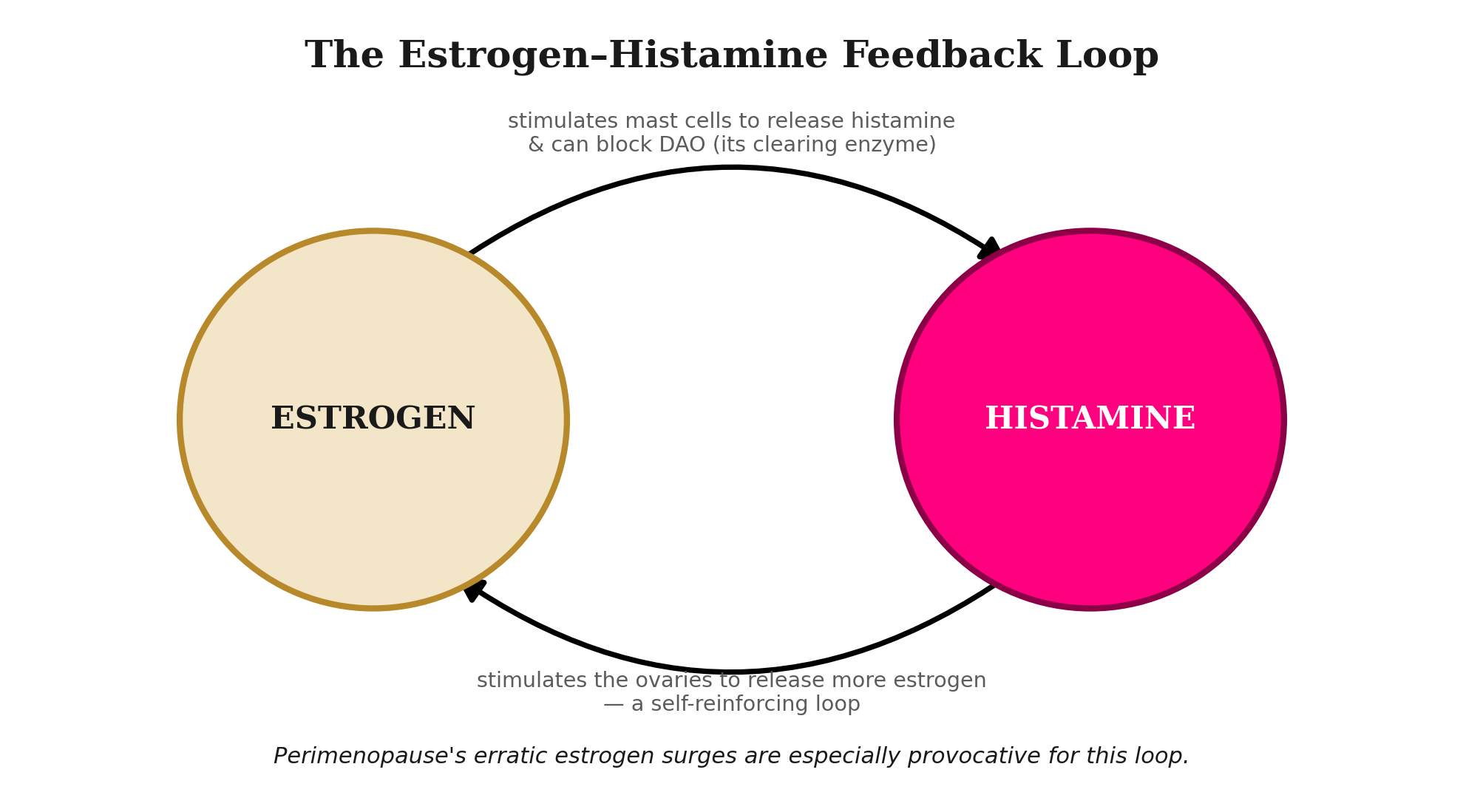
Perimenopause's erratic estrogen surges are especially provocative for this loop. Progesterone, which normally helps keep mast cells calm, is often the first hormone to decline. That is a double hit: more histamine released, and less of a brake to calm it down.
What can help with histamine overload
The biggest challenge with histamine is that we need to not only improve breakdown and detoxification of it, but more importantly, we need to calm down the over-production of it. These are usually where I start:
DAO enzymes with each meal to support histamine breakdown in the gut
DIM and calcium D-glucarate (CDG) to support estrogen clearance and detoxification without overly lowering estrogen levels
B6 as a major cofactor for histamine breakdown (use carefully and only short-term, typically 1 to 2 months)
Reducing high-histamine foods: alcohol, fermented foods, dairy, dried fruit and meat, tomatoes, and spinach
Amy Meyer’s Histazyme Product to help with more systemic clearance of histamine
Other possible options: Quercetin, vitamin C higher dosing, magnesium, B6 and trimethylglycine
In very extreme cases, I will sometimes use OTC antihistamines (H1 and H2 blockers) to calm symptoms short-term, but these do not resolve the underlying issue and long-term use can create problems including low stomach acid and immune dysregulation.
Root cause 3: skin, hair, and the androgen shift
Dry, less resilient skin. A crawling sensation that feels like ants under the skin (this has a name: formication, and it is a real, documented symptom). New chin hairs appearing the same month your ponytail starts feeling thinner. A sex drive that seems to have quietly left the building. These all trace back to the same underlying shift.
What is happening wit
h estrogen, androgens, and skin
Estrogen supports collagen production and your skin's ability to hold moisture. Research suggests women can lose up to 30 percent of their skin's collagen in just the first five years after menopause. As estrogen becomes erratic and declines, skin gets drier, thinner, and less elastic, and the nerve fibers in skin appear to become more sensitive, which is a proposed contributor to that unsettling crawling sensation some women describe.
The hair paradox, new growth on your chin and jawline alongside thinning at your part line, happens because estrogen and progesterone decline faster than testosterone and DHEA. That shift unmasks androgen effects that estrogen used to keep in check. Facial hair follicles respond to androgens by growing coarser hair, while scalp follicles respond to the same hormones by miniaturizing and thinning. The same ratio shift, combined with declining estrogen's effect on vaginal tissue and the sheer exhaustion of poor sleep and chronic stress, is a major piece of why libido often disappears in perimenopause. And if we are dealing with a decline in metabolic health, we will see the inflammation and blood sugar dysregulation worsen this.
Androgen-related symptoms to watch for
Hair Loss (often along the crown of the head indicating more androgenic loss, whereas more thinning all over can be a combination of thyroid issues, blood flow issues, and GI issues).
New facial hair growth
Dry or oily skin
Increased irritability or rage
Deepening of the voice
What can help with the androgen shift
Saw palmetto: a natural 5-alpha reductase inhibitor that blocks the conversion of testosterone into DHT, the more potent androgen responsible for scalp thinning and chin/jawline hair growth
Progesterone support: In perimenopause, progesterone tends to drop faster and earlier than estrogen, which leaves androgens relatively unopposed. Restoring progesterone helps rebalance that ratio and also calms the nervous system, which is why it helps with the irritability/rage piece too. We often start with Progon-B by Bezwecken (OTC).
Inositol (myo-inositol, or a 40:1 myo-to-D-chiro blend): improves insulin sensitivity. Insulin resistance is one of the biggest drivers of excess ovarian and adrenal androgen production, so better insulin sensitivity directly translates to lower androgen output.
Zinc: anti-androgenic on its own, works alongside saw palmetto to inhibit 5-alpha reductase, and supports oil regulation and hair follicle health directly
Blood sugar stability: protein and fiber first at meals, minimizing refined carbohydrates and alcohol, not skipping meals. Insulin spikes are one of the most underrated androgen triggers, so this is the free, foundational lever underneath all the supplements above.
Root cause 4: gut, bloat, belly weight, and breast tenderness
Bloating that seems to have no pattern. Belly weight that appears even though nothing about your diet or workouts has changed. Breast tenderness that feels like PMS but will not go away. New sensitivity to foods you have eaten your whole life, dairy especially.
Why your gut changes in perimenopause
Progesterone normally helps regulate gut motility. When it swings erratically instead of declining smoothly, digestion can become genuinely unpredictable, sluggish one week, fine the next. As progesterone drops relative to estrogen, that hormonal imbalance also shows up as breast tenderness and fluid retention, sometimes in a pattern that feels like permanent PMS.
Belly weight gain in perimenopause is less about calories and more about redistribution. Estrogen normally steers fat storage toward the hips and thighs and away from the abdomen. As that steering effect fades, fat shifts toward the belly, a pattern that shows up even in women whose weight and eating habits have not changed. Chronic stress compounds this because cortisol independently favors abdominal fat storage.
As for new food sensitivities, dairy in particular tends to become an issue for a few overlapping reasons: naturally declining digestive enzyme production as we age, shifts in gut bacteria, and dairy's status as a histamine-liberating food, which connects right back to the histamine piece above. It's less that your body suddenly turned on you, and more that several small shifts are compounding at once.
Gut-related symptoms to watch for
New bloating or food sensitivities, especially to dairy
Constipation, loose stool, or the two alternating
Right upper quadrant discomfort (gallbladder area)
Reflux or upper GI discomfort
Unexplained stomach pains
What can help with gut disruption
Stomach acid support - Low stomach acid impairs breakdown of food, can drive reflux and bacterial imbalances downstream. We often start with Betaine HCL mid-meal at each meal.
Bile Support - We love Fat Digest from VidalRx (code FITMOM) to support bile flow, which is responsible for carrying out your hormones via your stool after detoxification.
Digestive Enzymes - These can help with nutrient absorption and bloating that happens delayed after meals.
Immunolins/Immunoglobulins - These are great to support the immune system in the gut and the mucosal layer as that often declines as estrogen declines and can lead to leaky gut and food sensitivities. We will use Bloat-Eaze Pro from VidalRx (code FITMOM).
Functional approaches that actually help
You do not have to fix everything simultaneously. Start with whichever piece feels most disruptive to your life right now. Aside from the specific recommendations above, these are foundations I highly recommend getting close eyes on and optimizing.
Support your sleep first
Sleep is where many of these issues compound, and it is also one of the most responsive places to start. Because the GABA and allopregnanolone piece covered above plays such a direct role in sleep, calming nervous system practices in the evening do real physiological work, not just self-care. A short breathing practice, gentle stretching, and dimming lights an hour before bed all genuinely help. Keeping blood sugar stable in the evening also matters more than most people realize: a middle-of-the-night blood sugar dip can trigger the exact cortisol and adrenaline response that jolts you awake at 2 or 3am. Adding electrolytes at dinner and a small balanced snack before bed can help stabilize blood sugar overnight.
Dial in your diet
Favor stable, protein-forward meals over a rigid elimination diet. Identify your own trigger foods rather than assuming a blanket low-histamine or dairy-free approach is automatically required. Supporting gut health and easing up on alcohol and aged or fermented histamine-heavy foods during a reactive season both tend to make a noticeable difference.
Testing worth considering
A full hormone panel (estradiol, progesterone, and testosterone/DHEA-S, Sex hormone binding globulin, and LH/FSH) gives a far more useful picture than the standard workup most women get. Some other labs we highly recommend for women to be getting:
Full Thyroid Panel - TSH, T4/T3 Total and Free, Reverse T3, and TPO/TgAb Antibodies
Lipid Panel + Homocysteine and hs-CRP
Fasted Insulin and A1C
Iron Panel + Ferritin
Immune/Nutrient Markers: Vitamin D, Vitamin B12, ANA
BONUS: We love running genetics and a GI Map ideally for all of our perimenopause clients as it can help SO much in helping them optimize things long-term.
The bottom line
None of what you are experiencing is random, and none of it means something is wrong with you. Your body has been managing a much heavier load than anyone told you to expect, and perimenopause is simply the moment that load became impossible to hide. The symptoms are real, the mechanisms behind them are explainable, and piece by piece they are addressable.
Start with whichever piece feels most disruptive right now. Support your nervous system, look at histamine if random symptoms keep appearing without a clear pattern, get a comprehensive lab panel, and find a practitioner who will look at the full picture rather than a single hormone number.
Looking for a functional health practitioner who specializes in perimenopause and hormone balance? Connect with Becca or browse our directory of vetted practitioners here.