Why muscle is the missing piece of bone health (and how to start building it at any age)
By Aysha Rivera, CPT | Certified Personal Trainer, Founder of The Whole Fit Method
In this article you will learn:
Why muscle and bone are more connected than most people realize
How muscle sends both physical and chemical signals directly to your bones
Why this matters especially after 40, during menopause, and during weight loss
What the research says about resistance training and bone density
Practical first steps for building muscle to protect your bones
When people think about bone health, they think calcium, vitamin D, maybe a bone density scan someday. Muscle rarely makes that list, and that is a mistake. Every time you lift something heavy or climb a flight of stairs, your muscles send your skeleton a direct message to get stronger. Here is why knowing this matters even more after 40, and what it means for your bones if you are losing weight right now.
Bone is busier than you think
Bone is living tissue that never really stops working. It is constantly being broken down and rebuilt by two types of specialized cells. One type clears away old or damaged bone. The other, called osteoblasts, builds new bone right behind it. Researchers estimate this cycle replaces roughly 10 percent of your skeleton every year, which adds up to a full rebuild about once a decade.
That means your bones are under construction even as you read this, responding in real time to the signals your body is sending them. One of the loudest signals they receive comes from your muscles.
The physical conversation between muscle and bone
When a muscle contracts, whether you are carrying a suitcase or standing up from a chair, it pulls on the bone it is attached to. That pull creates pressure inside the bone itself.
Special cells buried inside bone sense that pressure almost like a built-in alarm system. When they pick up on it, they signal your bone-building cells to lay down new bone exactly where the pressure happened.
You can see this play out in real bodies. Researchers who compared the throwing arm and the non-throwing arm of professional baseball players found the throwing arm carried significantly more bone mass at the shoulder. In one study the difference was close to 28 percent more bone, in the same person, with the same hormones and the same diet. The only real variable was how much load each arm carried.
The reverse happens too. Take away the load through injury, illness, or long stretches of inactivity, and bone tips toward breakdown instead of growth. No load means no signal, and no signal means the skeleton has no reason to hold onto what it has.
This is a big part of why weight-bearing and resistance exercise show up again and again in bone health research. Muscle is the delivery system. The pressure it creates is the message that actually reaches your skeleton.
Muscle sends chemical messages to bone too
Physical pressure is only half the story. Muscle also acts like a chemical messenger, releasing compounds directly into the bloodstream in a way similar to how a gland works.
One of these compounds is called irisin. It is released by muscle during exercise, and early research suggests it may help activate bone-building cells. Some scientists are now studying whether irisin could become a measurable marker linking muscle loss to bone loss. The bottom line is that your muscles and your skeleton are wired together in ways that go well beyond the mechanical.
What happens when that conversation breaks down
Sarcopenia is the medical term for age-related muscle loss, and it rarely shows up alone. When muscle loss overlaps with bone loss, the combination raises the risk of falls and fractures far more than either condition does on its own.
If it has gotten harder to get up from a chair without pushing off with your hands, or a bag of groceries feels heavier than it used to, that may be muscle weakening and a signal connected to changing bone health. Both are worth paying attention to.
Why this matters especially during menopause
For women, the muscle-bone connection becomes especially important during the menopause transition.
Estrogen helps protect bone density, muscle mass, and connective tissue. As estrogen declines, women can lose both muscle and bone at an accelerated rate at the same time. Orthopedic surgeon and researcher Dr. Vonda Wright and colleagues named this pattern the musculoskeletal syndrome of menopause in a 2024 paper published in the journal Climacteric. They found that more than 70 percent of women experience musculoskeletal symptoms during this transition, with roughly one in four significantly affected.
The years when bone and muscle are most vulnerable to decline are often the same years women are told to simply expect more aches, less energy, and a slower metabolism. The research suggests those changes are not something to accept silently. They are, in part, a call to train differently.
What rapid weight loss does to bone
Rapid weight loss, whether from calorie restriction, bariatric surgery, or GLP-1 medications like semaglutide and tirzepatide, tends to take muscle along with fat. Less muscle means less pressure on bone, and researchers are now watching bone density shift alongside the number on the scale.
In one 2024 clinical trial, adults taking semaglutide lost an average of 9.4 percent of their body weight over a year. They also showed a 54.8 percent increase in a marker of bone breakdown, along with bone density decreases of 2.1 percent at the spine and 2.6 percent at the hip.
Researchers studying weight loss more broadly describe the pattern simply: less body mass, and often less muscle mass, generally means less daily load on the skeleton, which can mean less bone. Large-scale, longer-term data on how GLP-1 medications specifically affect bone is only now starting to come in, since widespread use is so recent.
A newer medication called retatrutide is still in trials and not yet FDA approved. Some researchers hope its different mechanism might help protect muscle during weight loss. So far, studies show people lose about the same share of muscle as with other options. That is a hopeful sign, not a guarantee.
What the current research does suggest clearly is that the muscle-building side of the equation cannot be skipped, especially if you are losing weight quickly or are already past the age where bone density naturally starts to decline.
How to build muscle to protect your bones
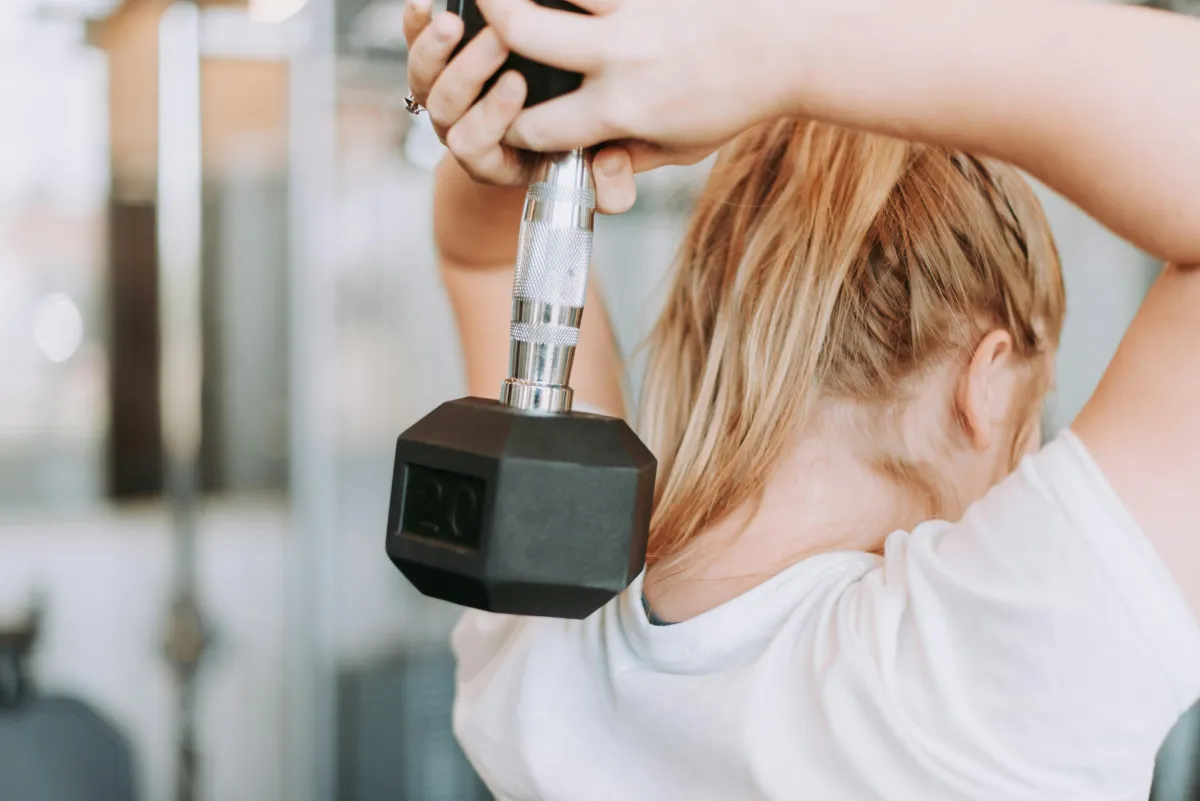
Research consistently points to resistance training, any exercise where your muscles work against a load, as one of the most effective tools for protecting bone density, especially in postmenopausal women. A 2025 analysis of 17 clinical trials found that resistance training significantly improved bone density at the spine and hip, with the strongest results coming from higher intensity training performed a few times a week.
My client Roz tracked her own numbers over about six months of consistent strength training. Her skeletal muscle percentage climbed from about 15 percent to nearly 19 percent, and her bone mass reading rose alongside it. That is one person's real progress, but it lines up with exactly what the research predicts.
This does not mean cardio does not matter. It does, for your heart and your overall stamina. But cardio alone does not put the same pressure on bone that lifting, pushing, or carrying weight does.
A few starting points worth discussing with a doctor, physical therapist, or qualified trainer:
Resistance training that genuinely challenges your muscles, not just moves them through the motion
Enough protein to support muscle repair and growth
Consistency over months, since bone rebuilds slowly and rewards steady effort more than intensity alone
Progressive overload: starting with 4 major compound lifts and adding approximately 2 pounds of weight to each lift every 3 weeks
Muscle and bone health FAQ
Can you have strong muscles but weak bones?
Yes, though it is less common than the reverse. Genetics, hormone levels, certain medications, and nutrition all influence bone density somewhat independently of muscle strength. Still, building muscle through resistance training remains one of the most reliable ways to support bone density over time, which is why the two so often move together.
Does walking count as exercise for bone health?
Walking is weight-bearing, so it offers some benefit, particularly for the hips. But it does not create enough pressure to meaningfully build bone density on its own. Pairing walking with resistance training gives your skeleton a stronger, more direct signal to build.
How soon can strength training improve bone density?
Bone rebuilds more slowly than muscle does. Most research shows measurable changes in bone density after 6 to 12 months of consistent resistance training, though improvements in strength, balance, and fall risk often show up sooner than that.
Is it too late to start building muscle for bone health?
No. Studies on resistance training in postmenopausal women in their 50s, 60s, and beyond consistently show meaningful improvements in bone density. The best time to start was years ago. The next best time is now.
What about GLP-1 medications and bone health?
Current research suggests that GLP-1 medications like semaglutide can reduce bone density alongside fat loss, in part because less body mass means less daily load on the skeleton. If you are taking a GLP-1 medication, this is a strong reason to prioritize resistance training and discuss bone health monitoring with your doctor.
The takeaway
Most of us were taught to think of bone health as its own separate category, one column for calcium and one for the gym. The research tells a different story. Your bones are listening to your muscles constantly, through direct physical pressure and through chemical signals sent straight to bone-building cells, and that conversation is either strengthening your skeleton or letting it decline invisibly.
If you want stronger bones, building muscle is not optional. It is one of the most direct tools you have.
Talk to your doctor or a qualified trainer about adding resistance training to your routine, especially if you are past 40 or currently working on weight loss. The science connecting muscle and bone is still being written, and it is worth paying attention to what comes next.
Ready to build strength and protect your bones with a program designed for real life? Browse our directory of vetted fitness and holistic health practitioners here.